Table of Contents
Before UPI: India's Cash Problem
In 2015, India was a predominantly cash economy. Over 90% of all retail transactions were conducted in cash. Banks served less than half the population. Getting money from one bank account to another took hours — sometimes days. NEFT transfers had specific windows. RTGS had minimum transaction limits. IMPS was available but fragmented. The idea of scanning a QR code and paying a vegetable vendor in under three seconds seemed like science fiction.
Then came demonetisation in November 2016 — and with it, the forced acceleration of an infrastructure that had been quietly built in the background: the Unified Payments Interface.
What UPI Actually Is
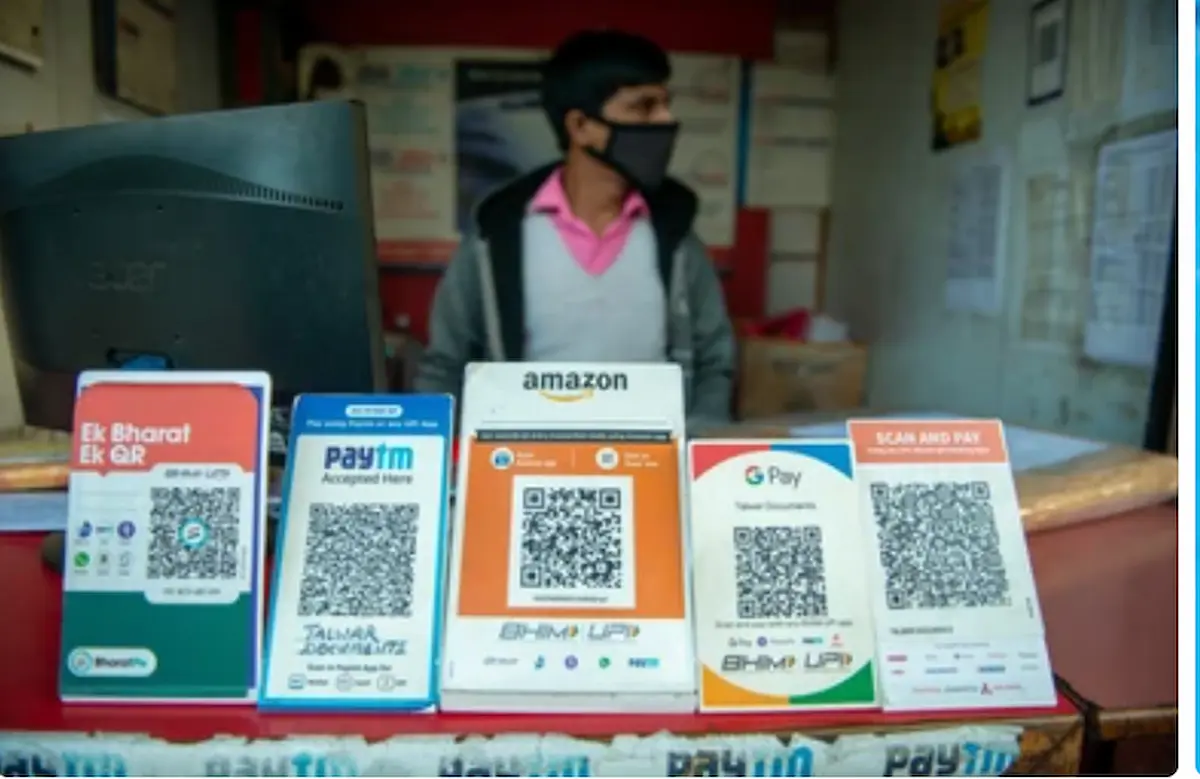
UPI is not an app. This is the most important thing to understand. UPI is an infrastructure layer — a set of open protocols built by the National Payments Corporation of India (NPCI) that allows any bank, any app, and any merchant to interoperate on a single real-time payment rail.
Think of it like the internet. The internet is not Chrome or Safari — it is the underlying protocol (TCP/IP) that allows any browser, any website, and any device to communicate. UPI is the TCP/IP of Indian payments. PhonePe, Google Pay, Paytm, BHIM, and hundreds of other apps are all just browsers running on top of the same underlying network.
This architecture — open, interoperable, and government-built — is what makes UPI fundamentally different from Visa, Mastercard, PayPal, or WeChat Pay. Those are closed systems owned by private companies. UPI is public infrastructure.
The Numbers That Changed Everything
The scale of UPI's growth is genuinely staggering. UPI's transaction volume rose from 375 crore in 2018 to 17,221 crore by 2024, with the total value of UPI transactions surging from Rs 5.86 lakh crore in 2018 to Rs 246.83 lakh crore in 2024 — a compounded annual growth rate of 89.3% in volume over five years.
Total retail digital payments reached 22,168 crore transactions worth Rs 849 lakh crore in the financial year 2024-25, marking a 35% increase in volume over the previous year. To put that in perspective: India now processes more real-time digital payment transactions than the United States, Europe, and China combined.
By May 2025, UPI had officially overtaken Visa in daily transaction volume, cementing its status as the world's largest real-time payment system, facilitating over 20 billion transactions each month.
Perhaps the most telling statistic: UPI accounted for 83% of India's total digital payment volume in 2024, up from just 34% in 2019. In five years, UPI went from one option among many to the dominant nervous system of Indian commerce.
Why It Worked When Others Failed
India was not the first country to attempt a real-time payment system. The UK had Faster Payments since 2008. The US had ACH. Several African countries had mobile money systems. So why did UPI succeed at a scale none of these achieved?
Three design choices made the difference.
Zero merchant discount rate. When UPI launched, the government mandated that merchants would pay zero fees on UPI transactions below a certain threshold. This was the opposite of how Visa and Mastercard work, where merchants pay 1-3% per transaction. Zero fees meant every kirana store, auto-rickshaw driver, and street food vendor had a reason to accept UPI. There was no margin calculation — the cost was simply zero.
VPA — the abstraction layer. UPI introduced the Virtual Payment Address, which looks like an email address (yourname@bankname). This abstracted away the complexity of bank account numbers and IFSC codes. You no longer needed to know someone's banking details to send them money. A phone number, a QR code, or a VPA was enough. This made UPI as simple to use as sending a text message.
Open API architecture. NPCI published UPI's APIs openly, allowing any developer or company to build on top of the network. This created an explosion of apps — each competing to offer the best user experience while sharing the same underlying infrastructure. The competition drove innovation. The shared infrastructure drove interoperability.
The Inclusion Story
What made UPI remarkable was not just its speed but its reach. The assumption before UPI was that digital payments required smartphones, literacy, and financial sophistication. UPI broke each of these assumptions.
NPCI introduced UPI 123PAY for feature phone users — enabling payments through interactive voice response, without requiring internet connectivity. Hello UPI extended this further with voice commands in multiple Indian languages. UPI Lite enabled offline micro-transactions for areas with poor network coverage.
The result was that UPI reached segments of the population that formal banking had never reached. A farmer in rural Bihar paying for fertiliser via QR code, a domestic worker receiving wages directly into her account, a migrant labourer sending money home without visiting a money transfer shop — these are not exceptional cases. They are the daily reality of 400 million UPI users.
The Geopolitical Dimension
UPI began as a domestic infrastructure project. It has become a tool of Indian foreign policy.
France became the first European country to accept UPI in 2024, with launch at prominent tourist sites including the Eiffel Tower. Singapore integrated UPI with its PayNow system in 2023. The UAE, Bhutan, Nepal, Mauritius, Sri Lanka, and several other countries have followed.
At the Global Fintech Fest 2025, PayPal announced that UPI became the first payment system integrated on the PayPal World platform for international transactions. PayPal CEO Alex Chriss noted India's growing reputation as a place where fintech talent, capital, and commercial opportunities converge.
Beyond adoption, India is helping other countries build their own UPI-equivalent systems. NPCI International is working with Peru, Namibia, and Trinidad and Tobago to develop domestic real-time payment infrastructure — creating a long-term network of interoperable payment systems anchored to India's standards rather than Western financial rails.
This is payments as diplomacy. Every country that adopts a UPI-compatible system reduces its dependence on Visa, Mastercard, and SWIFT — the American-controlled infrastructure that has historically given the US leverage over global financial flows.
The Challenges UPI Still Faces
UPI's success has not come without costs or complications.
Fraud has grown alongside adoption. As hundreds of millions of first-time digital payment users entered the system, so did sophisticated scammers. UPI-related fraud — fake QR codes, impersonation scams, social engineering attacks — has become a significant problem, particularly for older and less digitally literate users.
Market concentration is another concern. Despite UPI's open architecture, two players — PhonePe and Google Pay — together control over 80% of UPI transaction volume. NPCI has proposed caps on market share to prevent monopolistic outcomes, but enforcement remains a work in progress.
Cross-border functionality, while growing, remains limited. Indian tourists can use UPI in a handful of countries. But the vision of UPI as a global alternative to Visa and Mastercard requires many more bilateral agreements, regulatory harmonisation across jurisdictions, and currency conversion infrastructure that does not yet exist at scale.
Recommended tools & resources
If you want to explore India's digital payments infrastructure deeper, these resources can help.
Disclosure: Links may be affiliate links. See Disclaimer.
What UPI Tells Us About Public Infrastructure
The deeper lesson of UPI is not about payments. It is about the design philosophy of public infrastructure.
For decades, the dominant assumption in technology policy was that private companies, operating in competitive markets, would produce the best outcomes for users. The rise of Visa, Mastercard, and later PayPal seemed to validate this. But these systems also created enormous rents — the 2-3% fees that merchants pay on every card transaction, which ultimately flow through to consumers in the form of higher prices.
UPI demonstrated an alternative: government-built, open-standard infrastructure that enables private innovation on top while keeping the core layer free and interoperable. The government builds the road. Private companies build the vehicles. No one owns the road.
This model — sometimes called Digital Public Infrastructure — is now India's most significant export to the world. More than any product, brand, or company, UPI represents a philosophy of how states can use technology to serve citizens rather than extract from them.
Whether the world adopts this model, or continues to build private toll roads, may be one of the defining technology policy questions of the next decade.