Table of Contents
The Identity Problem Nobody Talked About
In 2009, more than 400 million Indians lacked any form of official identification. Without an ID, you couldn't open a bank account, get a mobile connection, receive government benefits, or prove you existed to the state. The poor were locked out of the formal economy, not because they lacked ability or ambition, but because they lacked a number.
The old system required reams of paper, endless queues, and multiple visits to government offices — with no guarantee that your documents would be accepted. Identity verification was fragmented, expensive, and exclusionary.
India's government had a simple but audacious idea: give every resident a verifiable digital identity. The result was Aadhaar — a 12-digit unique identification number backed by biometric data that would become the foundation of India's digital public infrastructure.
What Aadhaar Actually Is
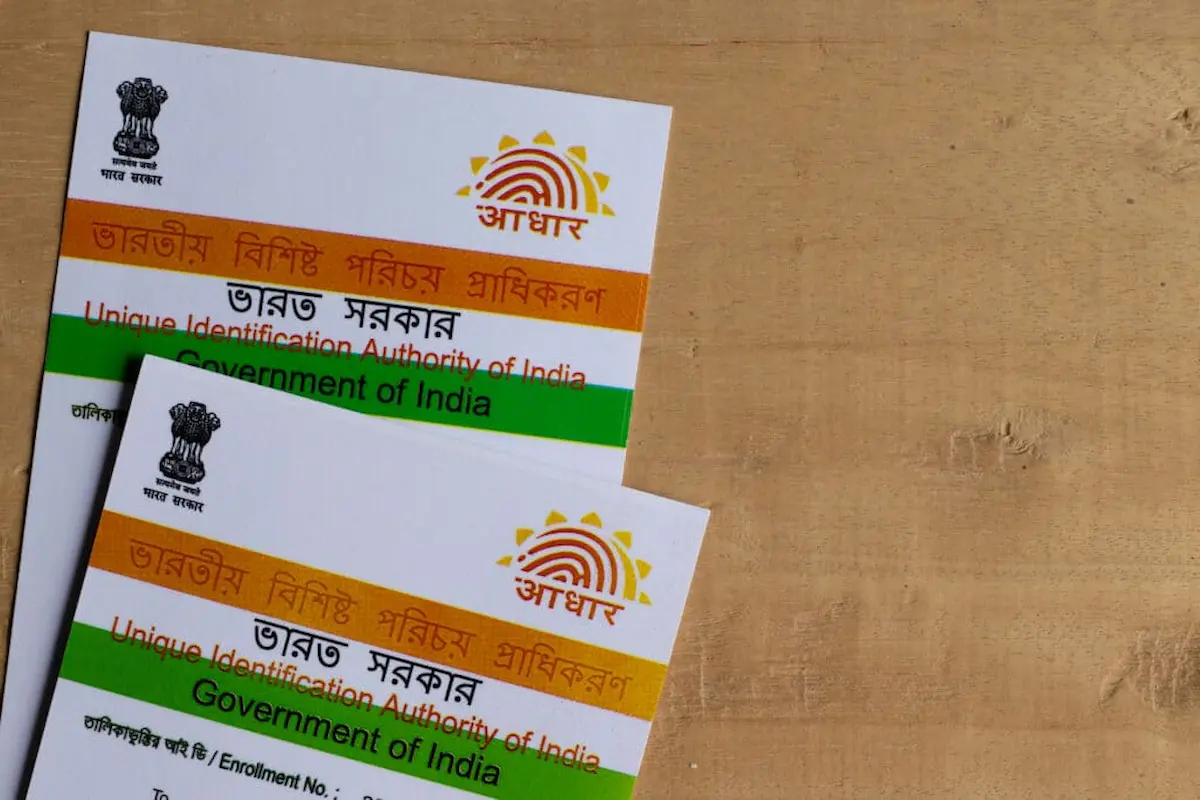
Aadhaar is not a card. It is a digital identity layer that allows individuals to prove who they are, online or offline, with high confidence. The Unique Identification Authority of India (UIDAI) issues the number based on minimal demographic information — name, address, date of birth, gender — and biometric data: fingerprints, iris scans, and facial photographs.
The ambition was simple: give every resident a single, portable identity that could be verified instantly and cost-effectively, without requiring physical presence or paper documents.
Infosys co-founder Nandan Nilekani, who led the committee that designed Aadhaar, received the initial mandate on a single page: "Give every Indian a unique ID." It didn't say how — just "do it." He brought together Silicon Valley technologists and government bureaucrats, set an audacious target of 600 million IDs, and built what would become the world's largest biometric identity system.
Today, Aadhaar covers over 1.4 billion people — nearly every resident of India — and handles roughly 2.5 billion authentication transactions each month. It is the foundational rail for India's digital economy.
How Aadhaar Works in Practice
Aadhaar's power lies in its simplicity. Instead of every bank, telecom company, or government department maintaining its own fragile ID system, Aadhaar provides a shared, verifiable foundation.
When you need to open a bank account, the bank verifies your identity against UIDAI's database using e-KYC (Know Your Customer). When you receive a government subsidy, the payment flows directly to your Aadhaar-linked bank account through the Aadhaar Payment Bridge System (APBS). When you need to authenticate a transaction, you use your Aadhaar number and either an OTP (One-Time Password) or biometrics.
The infrastructure is built on three layers that form India Stack:
Presence-less layer (Aadhaar). Enables identity verification without physical presence.
Paperless layer. Links digital records — e-KYC, e-Sign, DigiLocker — to Aadhaar identities.
Cashless layer (UPI). Enables seamless digital payments.
Aadhaar also enables face authentication, which has grown from under half a million transactions at launch to nearly 29 crore (290 million) annually. Unlike OTP or fingerprint-based methods, face authentication verifies that the person is physically present, building consent into the transaction itself.
The Growth Story — and Its Complications
Aadhaar's achievements are substantial. The government estimates it has saved approximately $41 billion by preventing fraud in welfare schemes. It has eliminated 4.15 crore (41.5 million) duplicate and fake LPG connections and 5.03 crore (50.3 million) duplicate ration cards, among other leakages across ministries.
Financial inclusion has been a major success. The Pradhan Mantri Jan-Dhan Yojana (PMJDY), combined with Aadhaar, has opened over 523 million bank accounts, bringing previously unbanked populations into the formal financial system. By 2023, over 788 million Aadhaar numbers were linked to bank accounts on NPCI's mapper.
Aadhaar-enabled Direct Benefit Transfer (DBT) has transformed welfare delivery. Instead of subsidies being siphoned off by middlemen or going to ghost beneficiaries, payments now flow directly to citizens' accounts. During the COVID-19 pandemic, Aadhaar proved essential for delivering emergency relief quickly and at scale.
Beyond welfare, Aadhaar has simplified everyday life. Opening a bank account, getting a mobile SIM, booking priority train tickets, buying a car, and admitting children to school have become faster and less bureaucratic. A textile business owner in Ahmedabad told The Guardian that Aadhaar has "streamlined everything" — he simply flashes his Aadhaar rather than carrying reams of paper to every office.
But the story is more complicated than the official narrative suggests.
The Problems Nobody Talks About
Aadhaar's expansion has generated persistent criticism. Privacy advocates argue that making Aadhaar near-mandatory for essential services amounts to "digital coercion." You need Aadhaar to buy a house, get a job, pay taxes, receive benefits, get a SIM card, book priority train tickets, and admit children to school. While technically optional, not having Aadhaar effectively means the state does not recognise your existence, activists say.
Implementation failures have been widespread. A farmer in Maharashtra's Chandrapur district discovered that another man in his village had been issued the same Aadhaar number. For three years, PM-KISAN payments and agriculture subsidies meant for him went to the other person's bank account instead. Despite repeated representations to authorities, the error remained unresolved.
Ranjana Sonawane, who became the first Indian to receive an Aadhaar card in 2010, is now locked out of welfare schemes. Government officials insist her ₹1,500 monthly stipend under the Ladki Bahin scheme is being deposited, but she has not seen a rupee. The account receiving funds may not even be in her name — or is a joint account she cannot control.
Studies show that nearly 73% of surveyed DBT recipients have experienced payment processing issues. Aadhaar seeding errors — linking Aadhaar to the wrong bank account or multiple accounts — account for about 18% of payment failures.
Digital rights groups point to unresolved structural problems: inaccuracies in the Aadhaar database, security lapses, and poor mechanisms for redress that disproportionately affect vulnerable populations. A 2018 incident revealed that Aadhaar data of 1.1 billion Indians was being sold online for as little as ₹500. While UIDAI has introduced new security measures, the system's track record on privacy and consent remains contested.
Aadhaar as Geopolitical Infrastructure
Beyond its domestic impact, Aadhaar represents a significant shift in global digital governance. India's digital public infrastructure — built on Aadhaar, UPI, and other platforms — has become a model for other nations seeking to modernise service delivery and financial inclusion.
The World Bank estimates that 850 million people globally lack formal identification, with 500 million in Africa alone. Countries like the UK have studied Aadhaar as a potential model for mandatory ID cards.
Aadhaar has been praised by international economists. Nobel laureate Paul Romer called it one of the most significant technological innovations globally, highlighting how it has laid a robust foundation for delivering government benefits and making public services more accessible.
But the model has also raised concerns. Critics warn that Aadhaar's expansion into private-sector and offline verification risks "Aadhaar creep" — normalising its use across social and economic life, despite a 2018 Supreme Court judgment that struck down provisions allowing private actors to use Aadhaar for identity verification.
The government's recent proposal to pre-install the new Aadhaar app on all smartphones sold in India has faced pushback from companies including Apple, Samsung, and Google, citing concerns about cost, device performance, and privacy. The Manufacturers' Association for Information Technology (MAIT) argued that pre-installation "would not drive greater public good."
The Road Ahead
UIDAI is already planning the next decade of Aadhaar. The Aadhaar Vision 2032 framework aims to upgrade the technology stack, leveraging artificial intelligence, blockchain, quantum computing, and advanced encryption to keep the system resilient against evolving cybersecurity threats.
An expert committee chaired by Neelkanth Mishra, Chairperson of UIDAI, is developing the roadmap. It includes leaders from academia and industry, reflecting the government's continued reliance on lateral entry expertise. The framework will align with India's Digital Personal Data Protection (DPDP) Act and emerging global standards of privacy and cybersecurity.
Key innovations already underway include:
A new Aadhaar app enabling selective disclosure — for example, sharing only your date of birth to prove you're over 18, without revealing your full Aadhaar number.
An Aadhaar sandbox offering anonymised datasets for AI and fintech developers to experiment responsibly.
Face authentication as a verification method that builds consent and reduces exclusion for users unable to provide fingerprints or OTPs.
Recommended tools & resources
If you want to explore digital identity and public infrastructure deeper, these resources can help.
Disclosure: Links may be affiliate links. See Disclaimer.
The Verdict
Aadhaar is neither the unalloyed success its supporters claim nor the dystopian failure its critics suggest. It has reduced fraud, streamlined governance, and brought hundreds of millions of people into the formal economy. It has saved the public exchequer billions of dollars and enabled India's rapid transition to digital services.
But it has also created new forms of exclusion — technical glitches that lock out those who need welfare most, privacy concerns that remain unresolved, and a system that can feel coercive to those who cannot opt out.
The direction is clear: India has bet on digital identity as the foundation of governance and economic inclusion. Whether that bet pays off depends on whether the system can address its shortcomings — better grievance redressal, stronger privacy protections, and genuine inclusion for the most vulnerable.
Like UPI in payments, Aadhaar represents an assertion that critical economic infrastructure should be a public good, not a private platform. It is an infrastructure project in the middle of its most difficult phase: past the initial enthusiasm, not yet at its full potential, dealing with real problems that have no easy solutions.
The open identity model had decades of fragmentation and exclusion to replace. Digital infrastructure deserves more than a decade to prove its case.