Sumeria: The Birthplace of Civilization and Control Systems
The Great Discovery
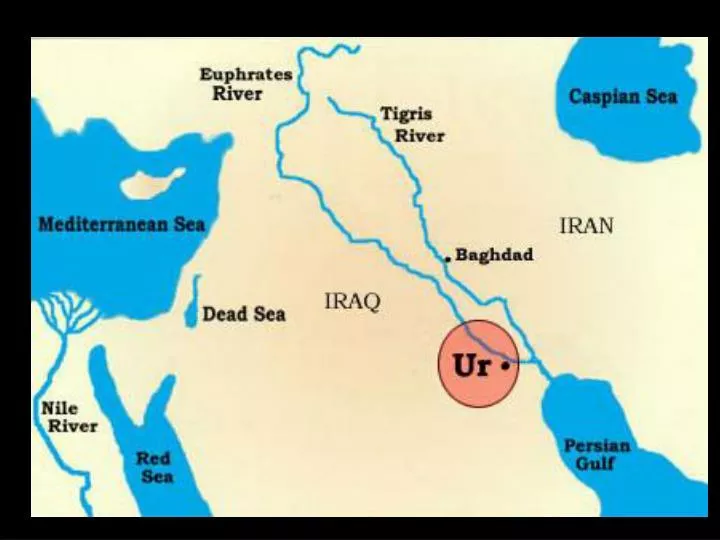
Around 3500 BCE, in the fertile land between the Tigris and Euphrates rivers, the Sumerians discovered something extraordinary. They realized that the human brain creates a model of reality, and by controlling that model, people could be controlled.
This discovery permanently changed human history. The Sumerians did not merely take the first steps of civilization — they created the first science of control. This land between the Tigris and Euphrates became the birthplace of systems that defined the next 5,000 years of human history.
The City of Ur — The First Control Center
In ancient Sumeria, the city of 'Ur' became the center of the first control system in human history. There, the priest class developed methods to control people using their secret knowledge. They were not merely religious leaders — they were historians, scientists, and bank managers.
The Ziggurat — Center of Knowledge, Power, and Wealth
The Ziggurat of Ur was not just a temple — it was the headquarters of knowledge, power, and wealth. In these buildings, priest-scholars preserved, developed, and passed down their secret knowledge through generations.
The Ziggurat was a pyramid-like structure. Its top was said to be where the god resided. But in reality, it was the priests' secret center. From there, they controlled the entire society.
Four Pillars of Control
Sumerian priests achieved remarkable expertise in four main areas:
1. Astronomy
Predicting eclipses, seasons, and astronomical cycles. They observed the sky closely and calculated celestial events precisely. Knowing in advance when solar or lunar eclipses would occur, they presented them as divine signs to frighten the people — thereby strengthening their authority.
2. Mathematics
Creating advanced systems for measurement and calculation. The Sumerians developed the sexagesimal (base-60) number system — still used today for measuring time (60 seconds, 60 minutes) and circles (360 degrees). This mathematical knowledge gave them the power to measure land, collect taxes, and build complex structures.
3. Writing (Cuneiform)
Developing cuneiform script to preserve knowledge. Cuneiform was one of the world's first writing systems. Through clay tablets, Sumerians recorded laws, trade agreements, scientific observations, and religious texts. However, this written knowledge was largely limited to the priest class — ordinary people could not read. This further strengthened knowledge inequality.
4. Economy
Managing loans, interest, and resource allocation. Sumerian temples were not merely places of prayer — they were the world's first banks. Farmers borrowed seeds, cattle, or silver from the temple and repaid with interest after harvest. Through this economic system, priests gained complete control over people's lives.
The Temple — Trinity Convergence
All this knowledge was stored in their temples. The temple was not just a religious center — it was the convergence of knowledge, wealth, and power. The authority to decide who received what knowledge and how much lay with the priests.
Expansion — Knowledge Travels
When Sumerian civilization fell, this control knowledge did not perish — it was transferred to another civilization. It traveled to Egypt, the Indus Valley, Greece, and Rome. Each civilization adapted this control model to its own culture — but the fundamental principle remained the same: concentrate knowledge in a few hands and control people's perception.
The control systems created by the Sumerians shaped human societies for millennia to come. Today's modern institutions — banks, universities, media organizations — are all evolutionary forms of this ancient model.
This is the second article in the "History of the Controllers of the World" series. In the next article, read about Egypt's control system, mystery schools, and Akhenaten's revolution.