The Egyptian System: The Perfect Model for Religious Control — and Akhenaten's Revolution
The Perfect Control Model
After the Sumerians laid the foundations of control systems, this knowledge traveled to the banks of the Nile. But ancient Egypt took this model to an entirely new level. While Sumerians taught control through knowledge, Egyptians perfected control through religion and divine belief. This civilization built around the Nile River became the most enduring control system in human history — over 3,000 years.
The Two-Tier Structure
Egyptians created a highly effective two-tier social structure:
First Tier — Ordinary People: Farmers, craftsmen, and soldiers. They believed the Pharaoh was a real god. When the Nile flooded each year and made the land fertile, they believed it happened because of the Pharaoh's divine power.
Second Tier — The Priest Class: They possessed the real knowledge. They controlled the Nile's flooding and agricultural seasons. Although the Pharaoh appeared externally as a god, real power lay in the hands of this priest class.
The Pharaoh — A Puppet
In this system, the Pharaoh was not an ordinary ruler. The Pharaoh was god himself — alive as god, dead as god. People worshipped him alive and dead. The entire universe, earth, and world revolved around the Pharaoh, they said.
But there was a deception. The Pharaoh was not the real ruler. The Pharaoh was merely a symbolic head. He did nothing. He just sat there. He did not control the system. Many people think "the Pharaoh oversees everything" but that is not true. The Pharaoh was merely a puppet. He was controlled by some people — the priest controllers. These priest controllers actually ran the Egyptian system.
Every year the Nile floods. The irrigation from that flood is presented not as a natural process but as the Pharaoh's creation. Sometimes the Nile did not flood well. Then they told people "you have done something wrong, that is why the Pharaoh is angry" and ran that narrative.
Mystery Schools
The heart of Egypt's control system was the Mystery Schools. These were not just educational institutions — they were fortresses of control knowledge. In these secret schools, priests preserved knowledge accumulated over generations.
What was in this knowledge? The sky, mathematics, astronomy, natural laws, Nile cycles, construction science, geometry, sacred geometry, ratios — all of this. This knowledge was not available to ordinary people. It was only with the priests.
In these mystery schools, priests were given this knowledge step by step, little by little. Each stage had a special initiation process. This was a very complex system. No one could learn everything at once. Step by step, level by level, one secret was revealed at each stage.
Nile Cycle Knowledge
They could calculate precisely when the Nile would flood and when it would recede. This gave them complete control over agricultural production. To the ordinary farmer, the Nile was a mystery — to the priest, it was a tool.
Construction Science and Sacred Geometry
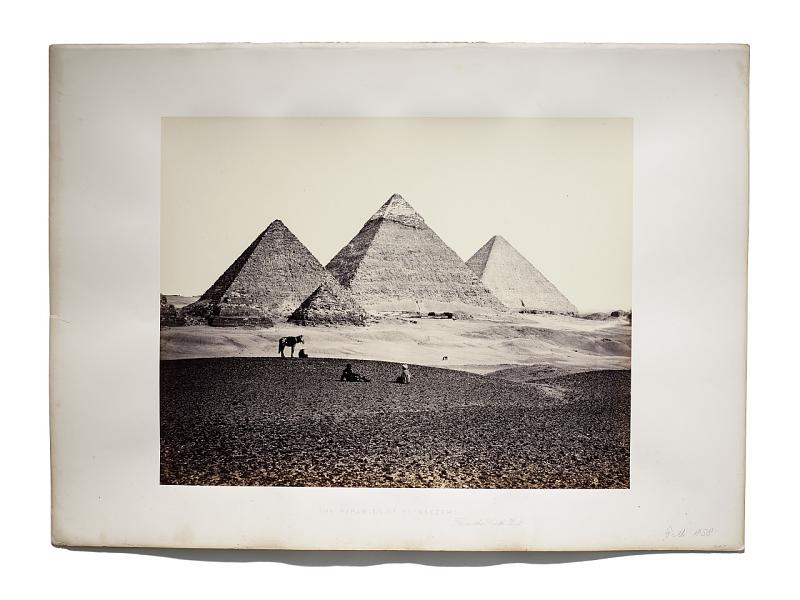
Pyramids were not just tombs — they were monuments of control. Building a pyramid required thousands of workers, decades of time, and immense resources. These massive structures sent a message to the people: "The Pharaoh's power is so great that he can build monuments that touch the sky." Through sacred geometry and ratios — knowledge known only to priests — pyramids were built with precise measurements.
Medicine and Astronomy
Priests acquired extensive knowledge about the human body, diseases, and treatments. By predicting celestial events like solar eclipses and star movements in advance, they made people believe they had a special relationship with the gods.
Why Did It Last So Long?
The Egyptian system lasted 3,000 years — a stability no other civilization achieved. Because it controlled not through force but through changing people's beliefs. Military power is temporary — but belief lasts for generations.
People did not ask questions like "there is no god, there is no world, then why am I working, why am I building these structures, why am I farming?" Instead they believed "the Pharaoh exists, the Pharaoh says so, therefore the earth is alive, therefore we must live." Without questioning much, without thinking much, they did as the Pharaoh said. That is why this system was so stable.
Slavery does not begin with physical chains — it begins with mental chains. The Egyptians understood this truth completely.
Akhenaten's Revolution — The Brave Challenger of the Control System
The Arrival of Akhenaten — 1350 BCE
For thousands of years, this system continued. But around 1350 BCE, a Pharaoh came. His name was Akhenaten. Before him, all Pharaohs were puppets. Priests controlled the Pharaoh. The Pharaoh was merely a doll. But in 1350 BCE, Akhenaten came.
Akhenaten wanted to break free from this system. He raised a question: "Who are these priests? To control me? What is this two-tier knowledge system? Beyond that, I should not be controlled by these priests. I am the Pharaoh, I am the god, I should be in charge."
The Revolution — Removing the Priests
From this ego, Akhenaten sparked a revolution. What he did:
He threw out all the priests. He closed temples and shrines. He brought all the wealth inside those temples under his control. That means he also took away the priests' economic power. Then he created a new principle.
One God — Aten
Akhenaten's declaration: there is only one god. That god's name is "Aten." Aten can be understood as the sun god. But there is a crucial point here. This god has no human form. Aten is a formless, shapeless, amorphous cosmic entity.
This is a very important point — because if god has no human form, there is no room for human involvement in politics. No one can present a human as god's representative and do politics in his name.
Moreover — accessing this god requires no mediator. No priest needed. No controller needed. Any person can interact with this god directly. This was a declaration that broke the backbone of the entire priest system. Because the priests' entire authority was based on the story "we talk to god, we have a direct connection with god, so you must come through us." Akhenaten took away that story.
Not Just Religious Reform — Political Revolution
This was a radical revolution for 1350 BCE. It should not be called merely a religious reformation. This was a complete political revolution. A revolution born to completely destroy the controllers. Akhenaten spent his life trying to spread this process.
Akhenaten's Death — The Priests Strike Back
But the minute Akhenaten died, the priests came back. They took over. They brought the entire system back under their control. They erased every trace of Akhenaten. They smashed his statues. They made his mummy unfindable. They completely destroyed the city Akhenaten built.
In a single generation, the revolution born — the concept of an all-pervasive god — was successfully killed by the priests. They brought back the previous system. The priests' and controllers' entire effort was to completely wipe Akhenaten from history.
But some traces remained. That is why we have this information today.
You Can Kill Buildings — But Not Ideas
The priests could demolish buildings. They could destroy cities. They could smash statues. But they could not kill ideas. The concept of "one god" slowly escaped. That idea fled from Egypt.
The Birth of Monotheism — Connection to Moses
This "one god" idea traveled to Palestine, to the region of Israel. Many believe — Moses started from here. From here, monotheism, Abrahamic faith, and Judaism were born.
Moses parted the Red Sea and entered from Egypt to Asia — to the region of Israel. That land is called Canaan. This entire journey, this idea — was born from Akhenaten, some believe.
Again, this is speculation. These are theories. We cannot know for certain. But whatever monotheistic religious tradition exists, whatever tradition created the Western world — that tradition is born in Egypt as a revolution. Against priestly control, against the controllers.
The Lesson of Akhenaten
Akhenaten's story is not just the story of a Pharaoh. It is the story of a brave man who challenged the control system. He questioned the priests' authority. He removed the mediation system. He introduced the concept of one god. That god had no form, no shape — so anyone could talk to god directly. No priest needed.
But after his death, the controllers returned. They tried to wipe Akhenaten from history. But they could not kill ideas. The "one god" idea left Egypt. That idea became the root of Abrahamic religions — Judaism, Christianity, Islam. Those religions created the Western world.
But the controllers took over those religions too. The revolutionary forces born from Akhenaten's revolution were infiltrated. This process continues from Egypt to Rome, Rome to London, London to New York — even today.
This is the third article in the "History of the Controllers of the World" series. In the next article, read about the Babylonian debt system, Greek philosophy, and the controllers' infiltration strategy.