Table of Contents
The Election Problem Nobody Talked About
India conducts the world's largest democratic exercise. The 2024 Lok Sabha elections alone involved approximately 968 million registered voters and cost an estimated ₹1.35 lakh crore. But India does not hold one election every five years. It holds elections almost every year — sometimes multiple times in a year — across states, creating a seemingly permanent campaign mode that diverts attention, resources, and political energy from governance to electoral positioning.
The structural costs of this perpetual election cycle are profound. Frequent elections require repeated deployment of security forces and bureaucratic resources — teachers pulled from classrooms to serve as polling officers, police forces redeployed from law enforcement to election duty, government officials diverted from their primary responsibilities for weeks at a time. The Model Code of Conduct (MCC) freezes policy announcements and new schemes whenever polls are announced, effectively suspending governance. The government estimates this disruption costs the economy dearly — not just in direct expenditure but in the opportunity cost of policies delayed, decisions deferred, and reforms postponed until after the next election.
But more fundamentally, frequent elections have created what critics call a "permanent campaign." Politicians are always running for something. Policy-making is always subordinate to electoral positioning. Long-term reform — the kind that produces short-term pain for long-term gain — becomes politically impossible when the next election is never more than a year away. The result is a structural bias toward populist giveaways, fiscal indiscipline, and the systematic avoidance of difficult decisions.
One Nation, One Election (ONOE) is India's proposed answer to this problem. But unlike most of the infrastructure reforms in this series — UPI, Aadhaar, DBT — ONOE is not built yet. It is a constitutional proposal, fiercely contested, that would fundamentally rewire the relationship between national and state politics. And whether it passes may be one of the defining governance questions of this decade.
What ONOE Actually Is
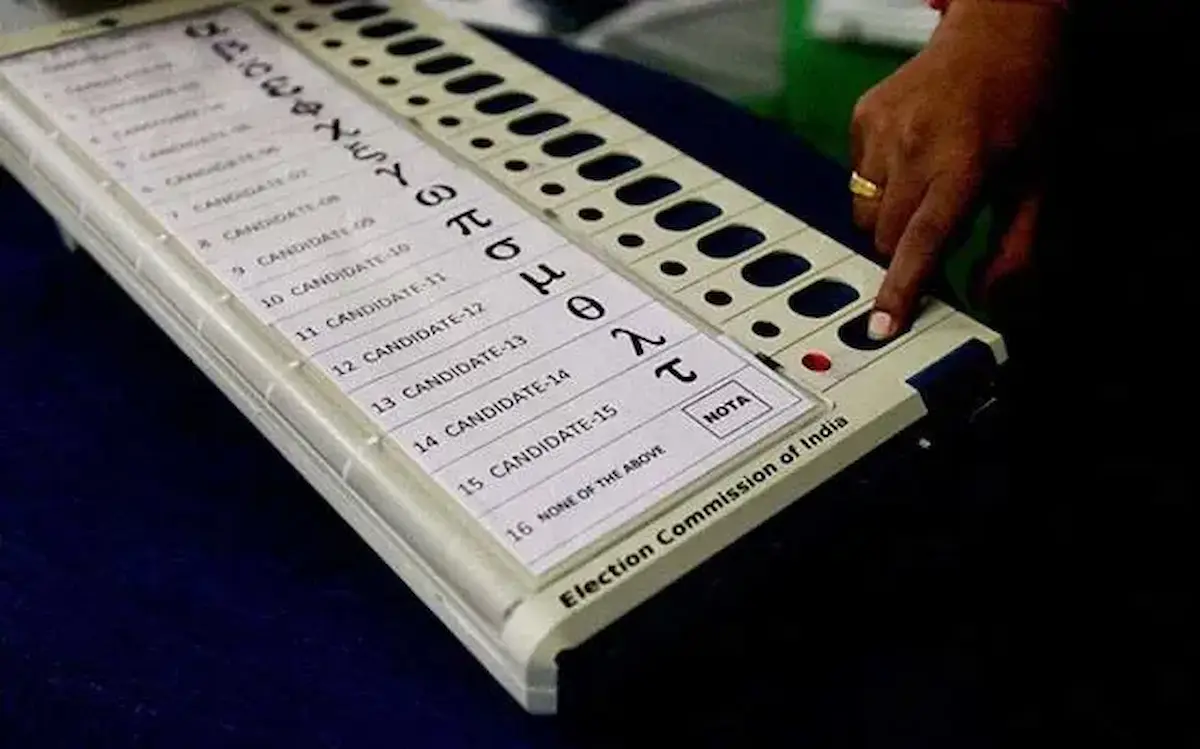
One Nation, One Election is a proposed constitutional reform to synchronise elections to the Lok Sabha (India's lower house of parliament) and all State Legislative Assemblies, so that they are held simultaneously. The proposal also envisions municipal and panchayat elections being held within 100 days of the national and state polls, in a phased rollout that would eventually align all three tiers of Indian democracy to a single electoral cycle.
The historical context is essential to understanding why this is framed as a reform rather than an innovation. India held simultaneous elections from 1951 to 1967. The cycle was disrupted in 1968 and 1969 when premature dissolutions of some state assemblies — driven by political instability and the Congress party's use of President's Rule to dismiss opposition state governments — led to separate election cycles. Elections have rarely been held together since. ONOE is framed not as a new idea but as a restoration of the original constitutional design — a return to how Indian democracy was meant to work before political expediency broke it.
The legislative path is complex. The government introduced the Constitution (129th Amendment) Bill, 2024, and the Union Territories Laws (Amendment) Bill, 2024, in Parliament. These were subsequently referred to a 39-member Joint Parliamentary Committee (JPC) for scrutiny — the first step in what will be a protracted legislative process.
The Kovind Committee report is the intellectual foundation of the proposal. A high-level committee chaired by former President Ram Nath Kovind submitted an 18,626-page report in March 2024 after 191 days of consultations with political parties, constitutional experts, civil society organisations, and the public. The report recommended 18 constitutional amendments to facilitate the transition. The committee noted that 32 political parties supported the concept during consultations, while 15 opposed it — a division that maps almost perfectly onto the national-versus-regional party divide.
How ONOE Would Work in Practice
ONOE is not a simple "hold all elections on the same day" proposal. It requires a detailed constitutional architecture to handle the reality that governments fall, assemblies are dissolved, and election cycles diverge. The Kovind Committee designed several mechanisms to manage this complexity.
The "Appointed Date" Mechanism
The committee proposes the concept of an "appointed date" through a new Article 82A. The President would notify a date, and all state legislative assemblies — regardless of when they were elected — would eventually synchronise with the Lok Sabha election cycle. For states whose assemblies are elected before this appointed date, their terms would be curtailed to align with the national cycle. For states whose assemblies are elected after, their terms would be extended until the appointed date. This is the mechanism that makes synchronisation possible — and it is also the mechanism that generates the most powerful federalism objections, because it gives the Union the power to shorten or lengthen a state government's elected term.
The "Remainder Term" Provision
If a government falls mid-term — after two years, for instance — the fresh election would not be for a full five-year term, but only for the remainder of the original term. So if a government falls after two years, the new election would be for the remaining three years. This is designed to maintain the synchronised cycle even if individual governments collapse. But it also means that a mid-term replacement government would govern with a truncated mandate — and with the knowledge that the next election is fixed, regardless of performance.
The Logistical Deferment Clause
The proposed Article 82A(5) would grant the Election Commission sweeping powers to defer an assembly poll if it believes it cannot be conducted simultaneously with the Lok Sabha election. Constitutional experts have questioned these "unfettered powers" and suggested that parliamentary approval should be required in such cases. The tension is between the need for operational flexibility — elections are logistically complex, and things go wrong — and the risk of concentrating too much discretionary power in an institution whose strength lies in being above political discretion.
The Constructive Vote of No Confidence
To avoid premature dissolution and maintain stable cycles, the proposal introduces the mechanism of a constructive vote of no confidence — borrowed from the German constitutional model. Unlike the current destructive vote, which merely dissolves the legislature and triggers fresh elections, a constructive vote requires the House to simultaneously express confidence in an alternative government. You cannot bring a government down unless you can propose a replacement that commands majority support. This is a structural stabiliser: it makes governments harder to topple, which makes election cycles more predictable.
The Legislative Roadmap
The Kovind Committee proposed 18 constitutional amendments, including changes to Article 83 (duration of Lok Sabha), Article 172 (duration of state assemblies), Article 324A (simultaneous elections to panchayats and municipalities), and Article 325 (common electoral roll and voter ID). Amendments to Articles 324A and 325 would require ratification by at least half of the state legislatures — a high bar in a politically divided federation.
The Arguments For ONOE
Economic Efficiency
The JPC has cited studies estimating that synchronised elections could save nearly ₹7 lakh crore by reducing administrative disruption, security force diversion, and economic downtime. The government argues that elections cost the exchequer enormous sums currently spent on repeated deployments of security forces, polling personnel, and administrative machinery. Whether the ₹7 lakh crore figure is precisely accurate is debated — but the direction is not. India spends more on elections than any other country, in absolute terms, because it holds more elections than any other country.
Governance Continuity
The Model Code of Conduct comes into force with every election announcement, effectively freezing policy-making for weeks or months. During this period, no new schemes can be announced, no appointments can be made without Election Commission approval, and routine governance is disrupted. With ONOE, the MCC would apply only once every five years rather than multiple times, enabling governments to focus on long-term development and policy implementation for the remainder of their term without the constant interruption of electoral cycles.
Reduced Voter and Official Fatigue
Elections require massive deployment of human resources — security forces, polling officials, teachers — often multiple times in a single year. This creates governance downtime, where officials are diverted from their core responsibilities. ONOE would reduce this frequency and burden, freeing up human capital for the work of governance rather than the work of campaigning.
Policy Stability
Supporters argue that frequent elections encourage populist measures — short-term giveaways designed to win votes rather than long-term investments in infrastructure, education, and health. With five-year immunity from immediate electoral backlash, governments could implement unpopular but necessary reforms. This is the most interesting argument for ONOE because it is an argument about the psychology of governance, not the mechanics of elections. The claim is that the permanent campaign produces a permanent bias toward the short term.
International Precedents
Supporters point to Sweden, South Africa, Belgium, and Germany, where elections are held simultaneously. They argue that India's electoral cycle — which has elections nearly every year somewhere in the country — is an anomaly among major democracies, and that restoring the 1951-1967 model would bring India in line with global best practice.
The Arguments Against ONOE
Threat to Federalism
This is the most fundamental objection, and it is structural, not political. India is constitutionally a Union of States, not a unitary nation. Each state has its own sovereign legislative sphere, its own political dynamics, its own electoral mandate. By forcing state election cycles to align with the Union's, ONOE subordinates state-level political priorities to national narratives.
As critics argue: a voter in Tamil Nadu might elect a government in 2026 with a mandate for five years. Under this regime, the Union gains the power to truncate that mandate to three years, or two, to align it with the "national cycle." The S.R. Bommai vs Union of India judgement (1994) established that federalism is part of the Constitution's Basic Structure and cannot be destroyed by constitutional amendment. Opponents argue that ONOE, by giving the Union the power to curtail or extend state assembly terms, violates this principle — not by destroying federalism outright, but by making state electoral mandates conditional on central convenience.
Curtailment of State Assembly Terms
The mechanism required to implement ONOE — extending or curtailing the terms of state assemblies — raises serious democratic questions. If an assembly elected for five years is dissolved after three, the people have been deprived of two years of their elected government. The constitutional mechanism proposed to curtail terms is presented as a transitional necessity. Opponents argue it is a permanent structural subordination of state democracy to national convenience.
National Issues Overwhelm Local Priorities
Simultaneous elections mean voters will choose their state government and national government at the same time, on the same day, in the same voting booth. Critics argue that in an era of hyper-nationalism and nationalised media, national issues will systematically overshadow local ones. A voter choosing between candidates for Chief Minister will be influenced by the Prime Ministerial contest happening on the same ballot. Structural changes to the electoral cycle would ensure that the national narrative — national security, foreign policy, the personality of the Prime Minister — drowns out regional narratives like water rights, irrigation, caste justice, language policy. This would disproportionately benefit national parties and harm regional parties, which is precisely why the political divide on ONOE maps so cleanly onto the national-versus-regional party axis.
The "Unexpired Term" Paradox
The remainder term provision contains a fundamental tension. If a government falls mid-term and a fresh election is held only for the remainder of the term, the cost-effectiveness argument for ONOE partially collapses. Under existing arrangements, a fresh election gives a new government a full five-year term. Under ONOE, it would give a shorter term — potentially requiring elections more frequently in times of political instability, not less. Moreover, a short-term government with a two- or three-year mandate has limited incentive for long-term policy-making, which undermines the very policy stability argument ONOE was designed to advance.
Mid-Term Instability Scenarios
What happens if the Lok Sabha is dissolved after two years? The Bill stipulates that elections for the remainder of the term will be held. But what about the state assemblies — do they continue, or are they also dissolved? Multiple scenarios could lead to a cascade of mid-term polls, undermining the stability ONOE seeks to create. The proposal handles the simple case — everything works as planned — but the difficult cases, where governments fall and cycles diverge, are where the architecture is least tested.
The Ratification Question
The government has maintained that amendments to Articles 83 and 172 — curtailing state assembly terms — "will not need ratification by the states." However, Article 368(2) mandates that amendments affecting the "legislative powers of the states" require ratification by 50% of state assemblies. Critics argue that by cutting short a state assembly's constitutionally guaranteed five-year life, the amendment fundamentally alters its legislative power. Whether this interpretation prevails will depend on the Supreme Court — and the Court's Basic Structure jurisprudence gives it considerable latitude to scrutinise amendments that affect the federal balance.
Impact on Local Governance
The Kovind Committee recommends Article 324A to force municipalities and panchayats to align their elections with the Lok Sabha, within 100 days. Critics argue this could undermine the 73rd and 74th Amendments (1992), which strengthened local self-governance as a constitutionally protected third tier of Indian democracy. By tethering a village pradhan's election to the Prime Minister's, the proposal ensures the nationalisation of the neighbourhood. Instead of voting on local issues like water supply or primary schooling, local elections will be fought on national issues — and the distinctive democratic space that the 73rd and 74th Amendments created will be absorbed into the national political cycle.
The Political Divide
Political parties are deeply divided on ONOE along predictable lines. The BJP supports the move, framing it as governance reform. Opposition parties — including the Congress, Trinamool Congress, DMK, Left parties, AAP, and AIMIM — oppose it as an existential threat to federalism and to regional parties' ability to compete on their own terms. Even some NDA allies like the JD(U) and TDP have expressed unease, because they understand that regional parties stand to lose the most from an electoral architecture that systematically advantages national narratives over regional ones. As one Opposition leader told the JPC: "Even some of the BJP's allies are uneasy about this proposal because they understand that regional parties stand to lose the most. Many of them fear they will be politically wiped out."
The Constitutional and Legal Landscape
The constitutional pathway for ONOE is narrow, contested, and contingent on political arithmetic that does not currently favour its passage.
The Basic Structure question: Former Chief Justice B.R. Gavai has argued before the JPC that ONOE does not violate the Basic Structure doctrine, stating that "the ONOE only brings about a change in the manner of conducting elections at one point. The structure of elections and voter rights remains the same." The Law Commission has also affirmed that the proposed legislation does not violate the Basic Structure, including principles relating to federalism and voter rights. But constitutional experts remain divided. The Supreme Court's Basic Structure jurisprudence has evolved to protect not just the explicit text of the Constitution but its underlying principles — and federalism is one of those principles. Whether the Court would treat the curtailment of state assembly terms as a violation of federalism is an open question that no amount of committee analysis can settle in advance.
The ratification requirement: The Kovind Committee proposed 18 constitutional amendments. Some — particularly those affecting state assembly terms and local governance — require ratification by at least 50% of state legislatures. In a politically divided federation where many states are governed by parties that oppose ONOE, this is a significant hurdle.
The parliamentary arithmetic: The 2024 election results reduced the BJP-led NDA from 353 to 293 seats (BJP from 303 to 240). The INDIA alliance won 233 seats, re-establishing a strong opposition in Parliament. Constitutional amendments require a two-thirds supermajority in both Houses — 362 in Lok Sabha and 167 in Rajya Sabha. The NDA government does not currently have such a majority, making the passage of the ONOE Bills contingent on broader political consensus that does not yet exist.
The 2029 target: JPC Chairman P.P. Chaudhary has stated that ONOE could become operational by the 2029 Lok Sabha elections, claiming the panel found that "almost 99 per cent of stakeholders, particularly from civil society and various organisations, favour simultaneous elections." But the 2029 target means that state assemblies elected in 2028 — like Karnataka — would either have their terms curtailed or extended to align, requiring either delaying elections or imposing President's Rule. Either path would generate constitutional litigation and political resistance on a scale that the committee's report does not fully reckon with.
ONOE in the Global Context
India is not alone in exploring electoral synchronisation. Sweden, the United Kingdom, Belgium, and Germany all hold elections simultaneously at different levels of government — or at least on a coordinated calendar. But critics argue that comparisons to Sweden and the UK are contestable because those are unitary states without sovereign state governments like India's. Germany uses proportional representation, not India's first-past-the-post system, and its federal structure allocates power differently. Forcing Germany's stability mechanisms onto India's dynamic, multi-party, first-past-the-post democracy, critics argue, represents a forceful stabilisation of a system whose vitality comes precisely from its responsiveness to regional political dynamics.
The deeper question is whether electoral synchronisation is a governance reform or a partisan project. In unitary states, simultaneous elections are administratively convenient and democratically neutral — no level of government is subordinated to another because there is only one sovereign level. In a federal state like India, simultaneous elections change the structural relationship between the Union and the States. That is not an administrative adjustment. It is a constitutional choice with winners and losers. The international precedents cited by ONOE supporters are less instructive than they appear because they come from systems with fundamentally different constitutional architectures.
The Road Ahead
The ONOE proposal faces a gauntlet of institutional, political, and legal obstacles.
The JPC Report: The JPC studying the ONOE Bills has sought an extension of its tenure to gather more stakeholder views. Its report, when submitted, will shape the parliamentary debate and determine whether the Bills proceed to a vote or stall in committee.
The ratification challenge: Even if Parliament passes the Bills with a two-thirds majority — which itself requires political consensus that does not currently exist — constitutional amendments affecting state powers require ratification by at least half the state legislatures. In a deeply divided political landscape, this is not a formality. It is a genuine hurdle.
The 2029 implementation timeline: The government's target of implementing ONOE by 2029 faces significant practical hurdles. States with elections before 2029 would need to accept curtailment of their elected terms — a proposition that no state government, regardless of party, is likely to accept voluntarily.
The legal challenges: Legal challenges to ONOE are inevitable if it passes. Opponents will argue that curtailing state assembly terms without state ratification violates the Basic Structure doctrine. The Supreme Court's interpretation will be decisive — and the Court's recent Basic Structure jurisprudence suggests it will scrutinise any amendment that affects the federal balance carefully.
Recommended tools & resources
If you want to explore electoral reform, constitutional law, and federalism deeper, these resources can help.
Disclosure: Links may be affiliate links. See Disclaimer.
The Verdict
One Nation, One Election is neither the governance panacea its supporters claim nor the democratic catastrophe its critics suggest. It is a constitutional reform proposal in its most contentious phase — past the initial proposal, scrutinised by a high-level committee, referred to a Joint Parliamentary Committee, but still far from the political consensus and constitutional majorities required for passage.
The arguments on both sides are weighty. The economic costs of frequent elections — ₹1.35 lakh crore for a single Lok Sabha election, repeated deployments of security forces and officials, the governance freeze imposed by the Model Code of Conduct — are real and large. The governance disruption is not a theoretical concern: policies are delayed, decisions are deferred, and reforms are avoided because the next election is never more than a year away. These are genuine problems that deserve serious solutions.
But the federal and democratic concerns are equally real. Curtailing state assembly terms without state ratification subordinates state democracy to national convenience. The nationalisation of state and local elections — forcing a voter to choose their Chief Minister and their Prime Minister on the same day, with the same information environment — systematically advantages national parties over regional ones and national issues over local ones. The remainder-term provision, while elegant in theory, creates perverse incentives for short-term governments with truncated mandates. And the ratification question — whether the Union can amend state assembly terms without state consent — goes to the heart of what Indian federalism means.
This is a different kind of infrastructure reform from the others in this series. UPI, Aadhaar, DBT, and GeM are built. They work. Their flaws are operational. ONOE is not built. It is a proposal whose implementation would require constitutional amendments, political consensus, state ratification, and likely Supreme Court scrutiny. It is the most ambitious and the most contested of India's governance reforms — and it may remain so for years. The question is not whether simultaneous elections would be more efficient. They would be. The question is whether the efficiency gains justify the federal costs — and whether those costs would be borne by the states or by the Union. That question, at its core, is not about electoral mechanics. It is about who holds power in Indian democracy, and whether the Union can restructure the electoral calendar to its advantage without the consent of the states it claims to represent.